La Caverne du Pont Neuf: JR’s Monumental Transformation of Paris’ Most Famous Bridge
What happens when one of Paris’ most famous bridges becomes a cave?
For Parisians, the Pont Neuf is anything but new. Completed in the early 17th century, the Pont Neuf (New Bridge) is the oldest standing bridge in Paris and one of the city’s most recognizable landmarks. Connecting the Right Bank, the Left Bank and the Île de la Cité, it has witnessed four centuries of Parisian history. And this summer, the time worn stone arches of the Pont Neuf have been transformed into something entirely unexpected: a cave.
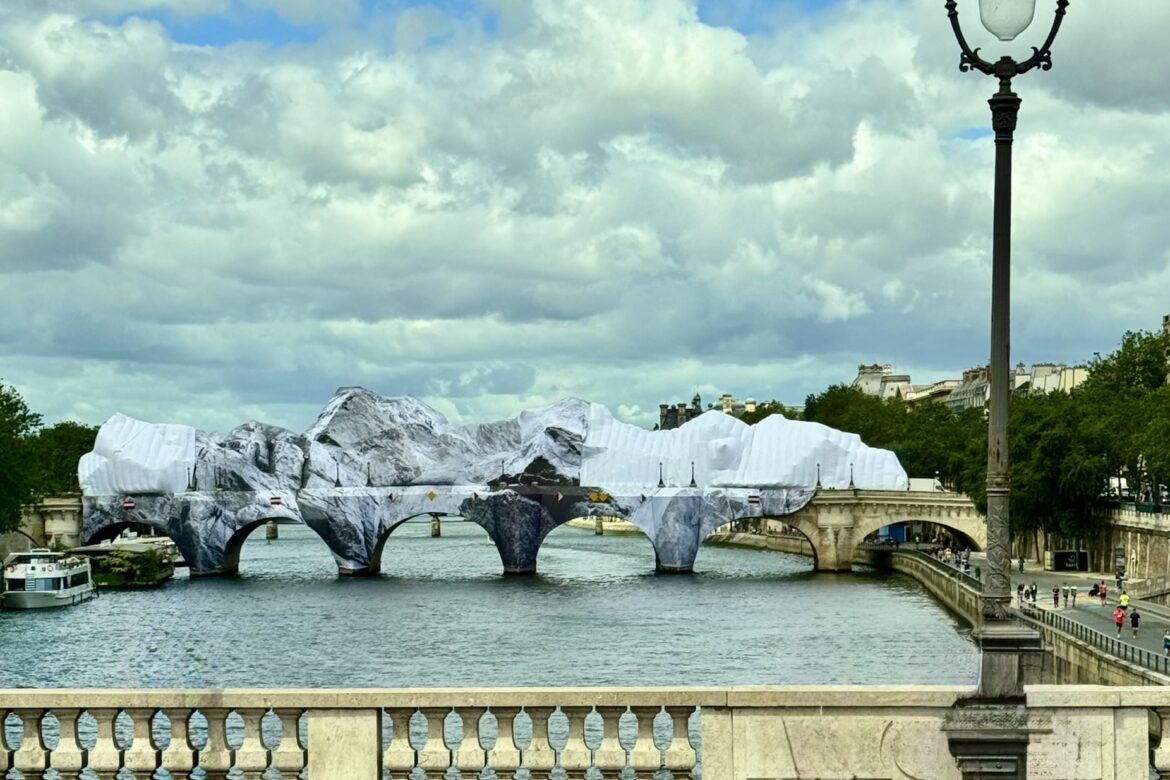
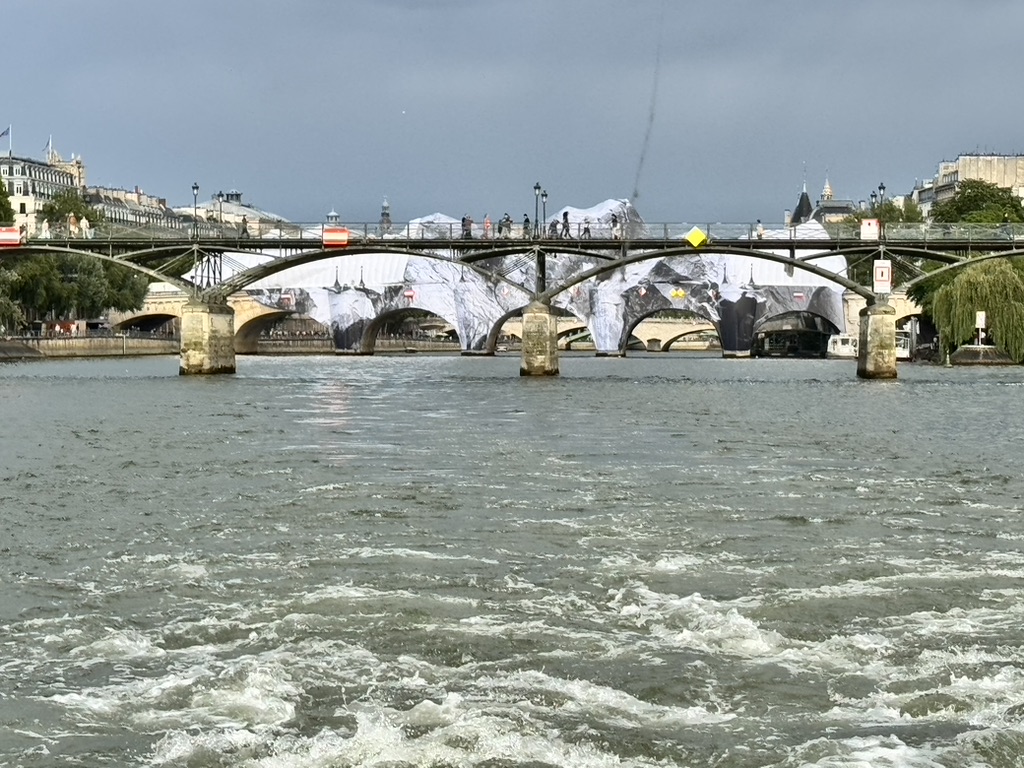
The art installation, called, “La Caverne du Pont Neuf” is the latest work by French artist JR, whose larte-scale public art projects have transformed landmarks around the world. Covering the bridge with an enormous mounain like surface, JR is inviting people to experience the beloved bridge through new eyes.
I was very excited to experience it for myself, as I was in Paris on the day it was scheduled to open. Sadly, the night before, an unusually strong windstorm damaged part of the cave, so it was not quite open yet. Even unfinished, the project generated a lot of excitement and reminded many Parisians of another famous transformation of the Pont Neuf nearly forty years earlier.
The Legacy of Christo and Jeanne-Claude
Any discussion of La Caverne du Pont Neuf inevitably recalls the legendary work of installation artists Christo and Jeanne-Claude.
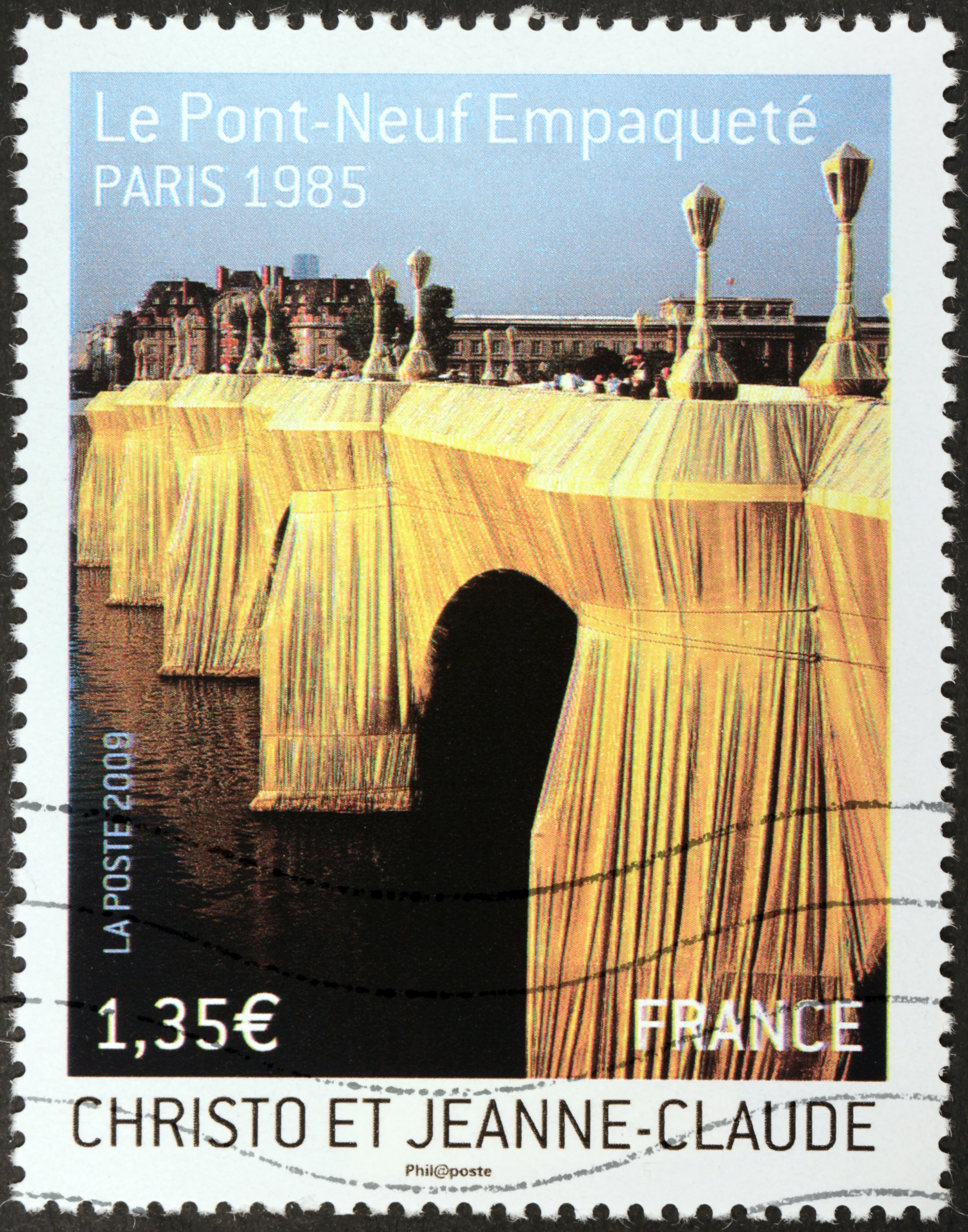
In 1985, the husband-and-wife artistic duo wrapped the entire Pont Neuf in a golden sandstone-colored fabric. The project took more than a decade of planning, required extensive negotiations with city officials and transformed the bridge into one of the most famous temporary art installations of all time.
For two weeks, Parisians experienced a familiar monument in a completely unfamiliar way. The wrapping concealed architectural details while also bringing attention to the bridge’s shape, scale and relationship to the city.
Why only two weeks? Christo was insistent that temporary works create a sense of urgency. Because they disappear, people make a special effort to experience them.
In 2021, and sadly, shortly after both Christo and Jeanne-Claude had passed away, the temporary art installation, titled “L’Arc de Triomphe, Wrapped”, was a posthumous realization of a 60-year-old dream by the renowned artist duo. The iconic monument was covered beneath 25,000 square meters of recyclable, silvery-blue polypropylene fabric and 3,000 meters of red rope.
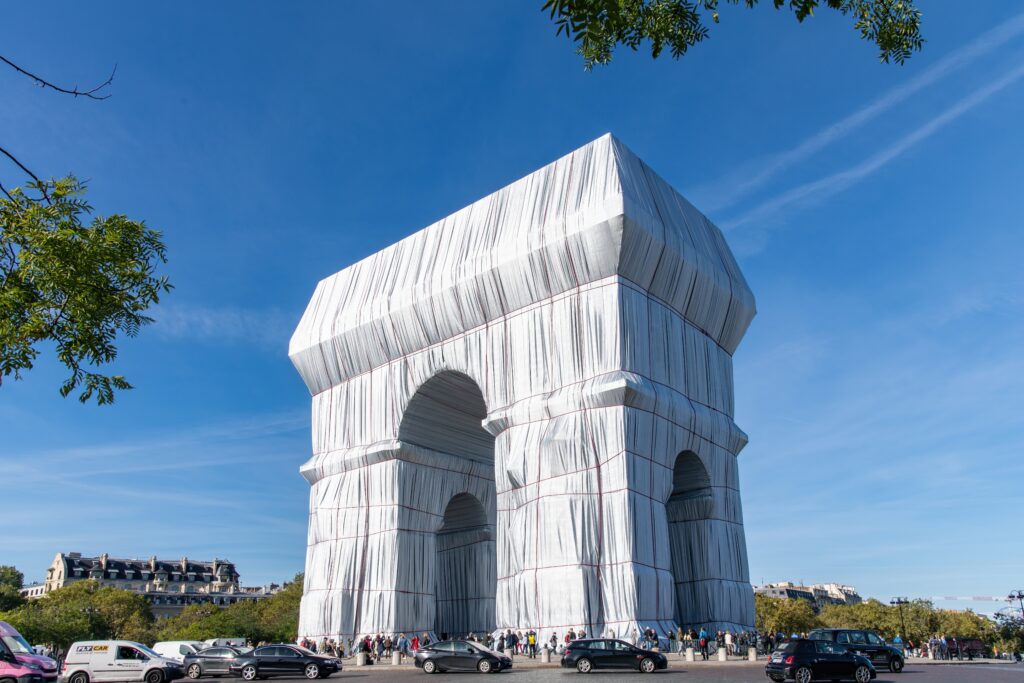
JR’s project clearly acknowledges this artistic lineage. Like Christo and Jeanne-Claude, he temporarily alters a beloved monument, encouraging viewers to reconsider something they thought they already knew.
Who is the artist JR?
Unlike Christo, whose work focused primarily on wrapping and transforming landscapes and structures, JR is best known for photography-based public art.
Born in Paris in 1983, JR began his career as a street artist, posting enormous photographic portraits throughout the city. As time went on, his projects expanded internationally, appearing on buildings, trains, shipping containers and public monuments all around the world.
His work often explores themes of visibility, memory, identity and community. Instead of placing art inside museums, JR brings art into public spaces where anyone can experience them.
Recently, he has become known for creating dramatic visual illusions on architectural landmarks. Through photography, construction and large-scale installations, he often turns familiar places into imagined environments that challenge perception.
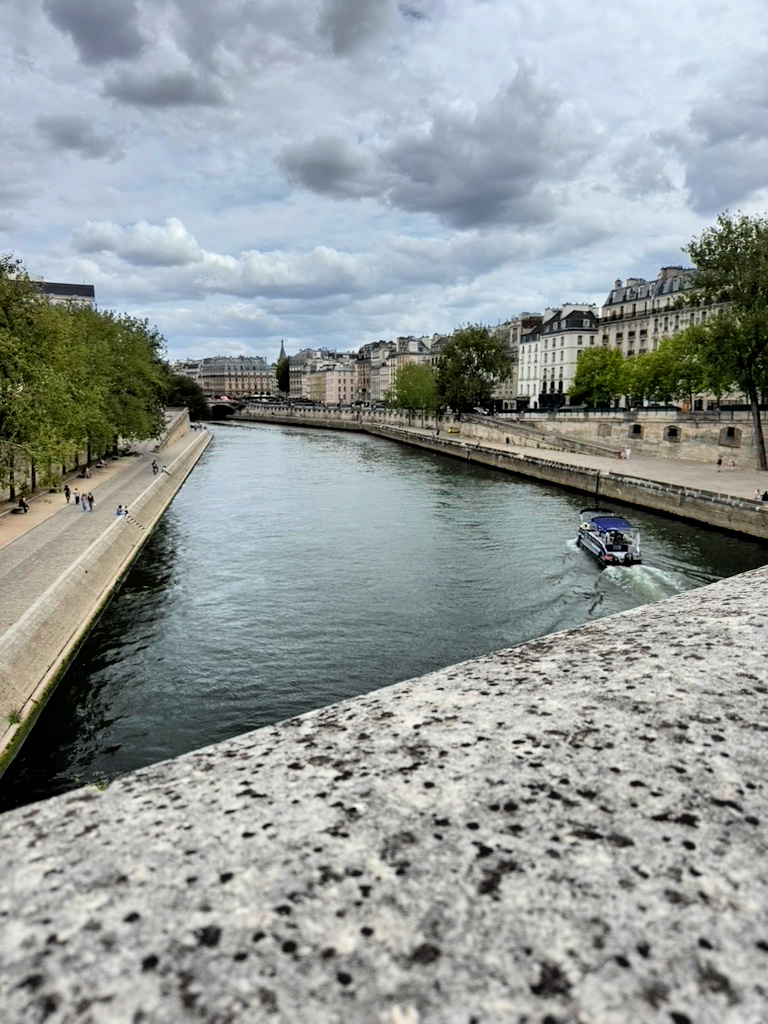
Why a Cave?
The title La Caverne du Pont Neuf raises an intriguing question: why transform a bridge into a cave?
A bridge is a connector, facilitating movement from one side to another. As as structure, it allows people to cross obstacles and navigate a space. On the other hand, a cave brings to mind nature, mystery, origins and exploration.
By covering the bridge with what appears to be rugged stone, JR creates a visual paradox. One of the most engineered and historic structures in Paris suddenly seems ancient and geological, as though some tectonic force allowed it to emerge from the earth.
The cave is one of humanity’s oldest symbols, bringing to mind prehistoric shelters, archeological discoveries and even Plato’s famous allegory of the cave, which examines the relationship between appearance and reality.
By transforming the Pont Neuf into a cavernous landscape, that people can still cross, JR asks visitors to question what they are seeing.
Our Return to Prehistoric Times
And here is where the commentary gets interesting, and I was able to experience it first hand myself. I heard so many people asking, “But what does it mean?” One person I met just shrugged his shoulders and said, “Isn’t it about climate change?” Apparently not.
The cave is a commentary on our modern, always-online-times. We are always on our devices, that purpotedly give us access to unlimited information, all in our pocket. However, more and more, the information being presented to us is often times false. And with the arrival of AI images and bots and fake social media accounts, are we becoming less informed? In fact, are we so uninformed, we have indeed returned to prehistoric times, when we lived in a cave, unaware of the world beyond?
One very Parisian explained all this and described how someone on his group chat was annoyed with the whole installation because it was causing her to spend more time, finding a different route rather than crossing the bridge. In her complaining, she had ironically had made JR’s point – stop, put your phone down, take some time to experience the world around you and the people in it.
A New Chapter for the Oldest Bridge in Paris
Whether viewed as a tribute to Christo and Jeanne-Claude, a continuation of Paris’ long tradition of public art, a playful architectural illusion or incisive social commentary, La Caverne du Pont Neuf demonstrates the enduring power of temporary intallation art. For a short time, one of Paris’ oldest monuments becomes something totally new, representing something totally old.
It could be that the true purpose is not to hide the Pont Neuf but to help us see it again. As with Christo’s wrapped bridge forty years ago, the installation will eventually disappear. The familiar stone arches will return and Paris will look the way it always has. But for those who cross through the cave, they may never see the bridge the same way again.
Ready to Go to Paris? Here is Where to Start:
Need a Place to Stay in Paris?
Your Guide to the Best Paris Hotels: Top Picks by Arrondisement
Best Hotels Under $500 in Paris
Or search the map here:
If You Enjoyed this Post, You Might Also Enjoy:
- What Makes American Art Feel So American? Reflections on the National Gallery’s America’s 250th Exhibition
- La Caverne du Pont Neuf: JR’s Monumental Transformation of Paris’ Most Famous Bridge
- Where I Ate in Paris in the Spring: A 4-Day Paris Restaurant Guide
- The Most Beautiful Spring 2026 Cookbooks (with French & Italian Soul)
- Insider’s Guide to Mediterranean Cruising
Be sure to follow my Instagram to see where I have been and where I am going.
Shop Paris & France & Italy:
Head to my LTK shop for fashion and home:

You can shop my Amazon shop with a selection of Paris inspired items.
Shop here for French items.
Shop here for French books.



















Leave a Reply